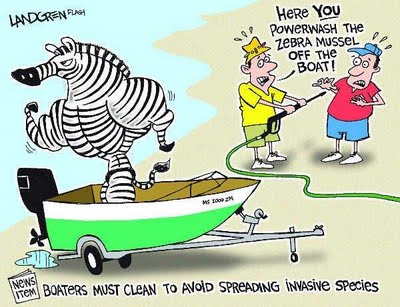
Welcome to my disciplinary text set focused on invasive species.
These text sets are structured for students in 9th and 10th grade Biology and Environmental Science. This class may be culturally diverse with some ELL’s so I would offer additional resources to be sure all students are engaged in the content. The videos within the text sets have closed captioning and some language translation available. The text does offer some translations to readings if that will assist students with comprehension. I will be sure the ESL teacher is available and on my class schedule for those ELL students that may struggling with the reading. The text sets that are multimedia offer written, visual, and audio instructions so content is presented in a multitude of ways for different types of learners.
The text sets will be part of units on the ecosystem, biodiversity, and environmental stability. The assessments for the text sets can be done in writing or illustration if necessary, for ELL’s to demonstrate understanding and knowledge of the content. In addition, invasive species are not just a North American problem. The content can draw on the past cultural experiences of ELL’s. These past experiences will assist them in class discussion.
I am not sure if there is a ‘best’ order to consider for introducing the text sets. I am however, convinced that the last text to be taught is the Emerald Ash Bore(EAB). The activity for this class involves out of classroom investigation. My thoughts for this are that students can compile some questions of their own regarding the Emerald Ash Bore from previous readings and text sets. The Students will then be assigned an area designated by the teacher to investigate for signs of the EAB. Prior to beginning this unit, I would contact and then work with city or county arborists to determine areas where EAB is already present. Students will then have the opportunity to gather data; photos, written, and possibly specimens if approved. The students will then put together a presentation to be shared with the class. The text sets would be used with the approved text book to deliver a layered approach to the content.
These are my thoughts. I would appreciate any constructive comments or ideas that you may have.
The threat of invasive species – Jennifer Klos
Citation: Kloss, J. (n.d.). You Tube. Retrieved from The threat of invasive species-TED Ed lessons : https://youtube.be/spTWwqVP 2s
Summary: This video is an introduction to invasive species. The video explores how species moved naturally and with the help of humans.
Text Complexity:
Quantitative: The text complexity was determined by using Story Toolz. The text was given an average of 9.7.
Qualitative: The quantitative average of 9.7 is accurate in my opinion. The video does have several vocabulary words that would be introduced to students in advance of viewing.
Vocabulary: Ravenous, kudzu vine, subsidized, Burmese pythons, outcompeting, ecosystems, coevolution, non-native organisms
Purpose: I would use this text as an introduction to invasive species. It does a good job of explaining what invasive species are and why they can be so destructive.
Question/Activity: Why should invasive species be monitored and what can be done to prevent further invasions?
Asian Carp: Threat to Great Lakes – QUEST Wisconsin
Citation: KQDondemand. (n.d.). you Tube. Retrieved from Asian Carp: Threat to Great Lakes-Quest Wisconsin: https://youtube.be/j9fgqA8kpYA
Summary: This video provides history, current status, and possible solutions to the invasive Silver and Big Head Carp and the Great Lakes Basin.
Text Complexity:
Quantitative: Story Toolz give an average text complexity of 11 to the video.
Qualitative: The complexity average provided by Story Toolz I believe is too high. The content covered in the video is not complex and vocabulary used is explained. In my opinion the text is at a 9th grade readability.
Vocabulary: aquatic ecosystem, silver and bighead carp, voracious plankton eaters, plankton, EDMA, bubble barriers, oxygenation
Purpose: This text will be used as a connecting piece in the invasive species unit. This video provides the history of the Silver and Big head Carp in the United States and its current push north. The environmental threat is explained well and is of no surprise. However, the economic threat the species poses is very real and would be felt by countless numbers of people.
Question/Activity: How is the University of Notre Dam using the EDMA genetic information to combat the further spread of these invasive Carp? What other ways could be used to control the spread using modern science (think science fiction like)?
Science Journal for Kids, Why do invasive species like artificial lakes? https://www.sciencejournalforkids.org/uploads/5/4/2/8/54289603/kariba_article.pdf
Citation: Halton, C. (2013). Biodiversity Education and Awareness Network. Retrieved from Science Journal for Kids: https://www.sciencejournalforkids.org/uploads/5/4/2/8/54289603/kariba_article.pdf
Summary: This text contains basic information regarding invasive species. The text concentrates on one invasive species and goes through the life cycle, explains the research study conducted and provides data that is catered to the students.
Text Complexity:
Quantitative: The text is given a complexity average of 9.8 by Story Toolz.
Qualitative: After a review of the text I think the readability assigned by Story Toolz is correct. The students will have already been introduced to the concept of Invasive Species and will have completed basic readings explaining the negative impacts these plants and animals have on native ecosystems.
Vocabulary: Niche, Parasite, Asexual reproduction, Hydroelectric dam, Larva, Reservoir, Susceptible, Flatworm, Liver fluke
Purpose: This text will be introduced after students have already explored the basic concepts of invasive species. The text would be used to illustrate how research is conducted and what can be done to control the spread of invasive species.
Question/Activity: Students would need to research an invasisve species within the state. Students would be required to research the history of the organism, what research has been done, and what is being done to eliminate the problem.
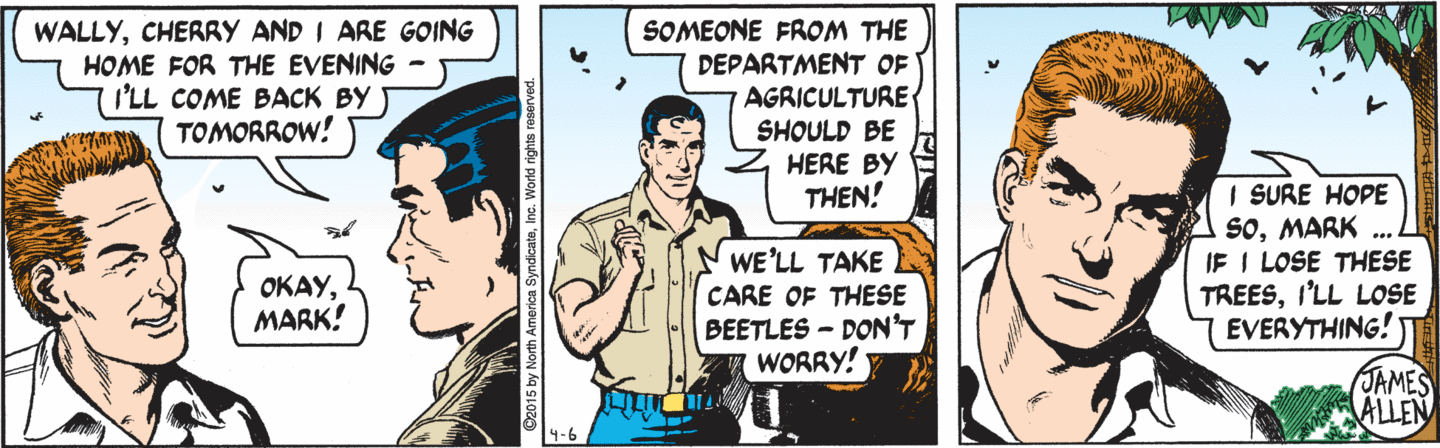
Emerald Ash Bore, Emerald Ash Borer Information Network
https://www.arborday.org/trees/health/pests/emerald-ash-borer.cfm
http://www.emeraldashborer.info/
Citations: University., M. S. (2019, june 3). emerald ash bore information network. Retrieved from emerald ash bore information network: Foundation, T. A. (2015, april 2). http://www.emeraldashborer.info/indicia.php
Emerald Ash Bore. Retrieved from The Arbor Day Foundation : https://www.arborday.org/trees/health/pests/emerald-ash-borer.cfm
Summary: These texts work together to provide information about the Emerald Ash Bore (EAB). The text includes how the EAB may have arrived in the United States, how it has spread to different states, and what is being done to combat this invasive species.
Text Complexity:
Quantitative: The first article from the Arbor Day Foundation has an average text complexity of 12.4. The second article from the University of Michigan was given an average text complexity of 9.5. The text complexity was determined by using Story Toolz.
Qualitative: After reading each text I consider both to be at an average reading complexity of 10th grade.
Vocabulary: infestation, Larvae, dieback, Quarantine, multinational, arborists
Purpose: These two texts would be used after I had begun the invasive species unit. The texts would be used as a multiclass lesson regarding the EAB and its effects on the ecosystem, economy, and environment.
Question/Activity: Field and Classroom. Students would be broken into groups of 4 and assigned different areas where EAB has infested local trees. The teacher would have assigned areas based on information from city or county arborist. Students would gather data based on questions they have formed from the assigned readings. Students would return to the classroom and create a presentation to present to the rest of the class.
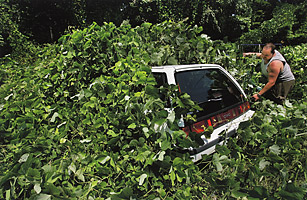
Green Invaders What is an invasive plant?
https://kids.nationalgeographic.com/explore/science/green-invaders/
Citation: Tallmay. (n.d.). nationial Geographic. Retrieved from nationial Geographic for kids: https://kids.nationalgeographic.com/explore/science/green-invaders/
Summary: This text is for English Language Learner’s to explore invasive species. The content and knowledge are included but are done so with lower level vocabulary. The text also included links to related topics.
Text Complexity:
Quantitative: I used Story Toolz to calculate the text complexity. The text was given a readability of 8.9.
Qualitative: After reading through the text I agree with Story Toolz that the text has a readability of 8.9.
Vocabulary: entomologist, migrating, caterpillars, encourages, milkweed, invaders
Purpose: The purpose of the text is to introduce ELL or ESL students to invasive species. The text includes links to related invasive species topics, such as ways to combat and promote native species.
Question/Activity: Prior to the reading I would ask the students to explain or draw what they think an invasive species is. After the reading I would ask the same question to assess their knowledge of the reading content.
A DAY IN YOUR LIFE WITH INVASIVE SPECIES
https://naitc-api.usu.edu/media/uploads/2015/03/24/A_Day_in_Your_Life_with_Invasive_Species.pdf
Citation: Rosenthal, G. (2013, april 2). national agriculture in the classroom. Retrieved from national agriculture in the classroom: https://naitc-api.usu.edu/media/uploads/2015/03/24/A_Day_in_Your_Life_with_Invasive_Species.pdf
Summary: The text explores how invasive species affect our every day lives. The reading starts at breakfast and continues all the way to an afternoon baseball game.
Text Complexity:
Quantitative: The text complexity was given a 7.9 by Story Toolz.
Qualitative: I think the readability rating provided by Story Toolz is accurate. The reading covers the topic of invasive species without being too difficult. When just looking at the vocabulary the rating seems too low. However, the use of rewordify could simplify this even further.
Vocabulary: Biodiversity, Biomass, APHIS, artisan, biological diversity, economic dependency, self-reliance, treatments, economic impact
Purpose: The purpose of the text is to introduce ELL or ESL students to invasive species. The text also includes economic relevance to agriculture.
Question/Activity:
What are invasive species?
What kind of threat do invasive species pose?
What kind of damage can invasive species cause?
How do invasive species affect me and my State, community, and family?
Why are U.S. agriculture and forests important? How do I rely on them?
 Ryan's Blog