Blog for Biology and Environmental Science Educators
Be yourself; Everyone else is already taken.
— Oscar Wilde.
My goal as a teacher is to provide my students with the
support and encouragement to become the best they can be. We will explore
biology and environmental science as separate sciences and how they cooperate
with each other. Environmental issues are an everyday occurrence. We will
investigate what we can do as individuals within our communities to make a
positive difference on the world around us. I invite you to join me on this
journey as I work towards my teaching goals.
First of all thank you for visiting my blog. My name is Ryan
and I am a graduate student at UW Milwaukee in the School of Education. I am
studying curriculum and instruction and my goal is to be a middle school
Biology and Environmental Science teacher. I live between Milwaukee and Madison
on a hobby farm I share with my wife and three sons. We raise goats, turkeys,
and pigs which keeps us very busy when we are not at work or school. I have a
passion for the outdoors and our natural resources.
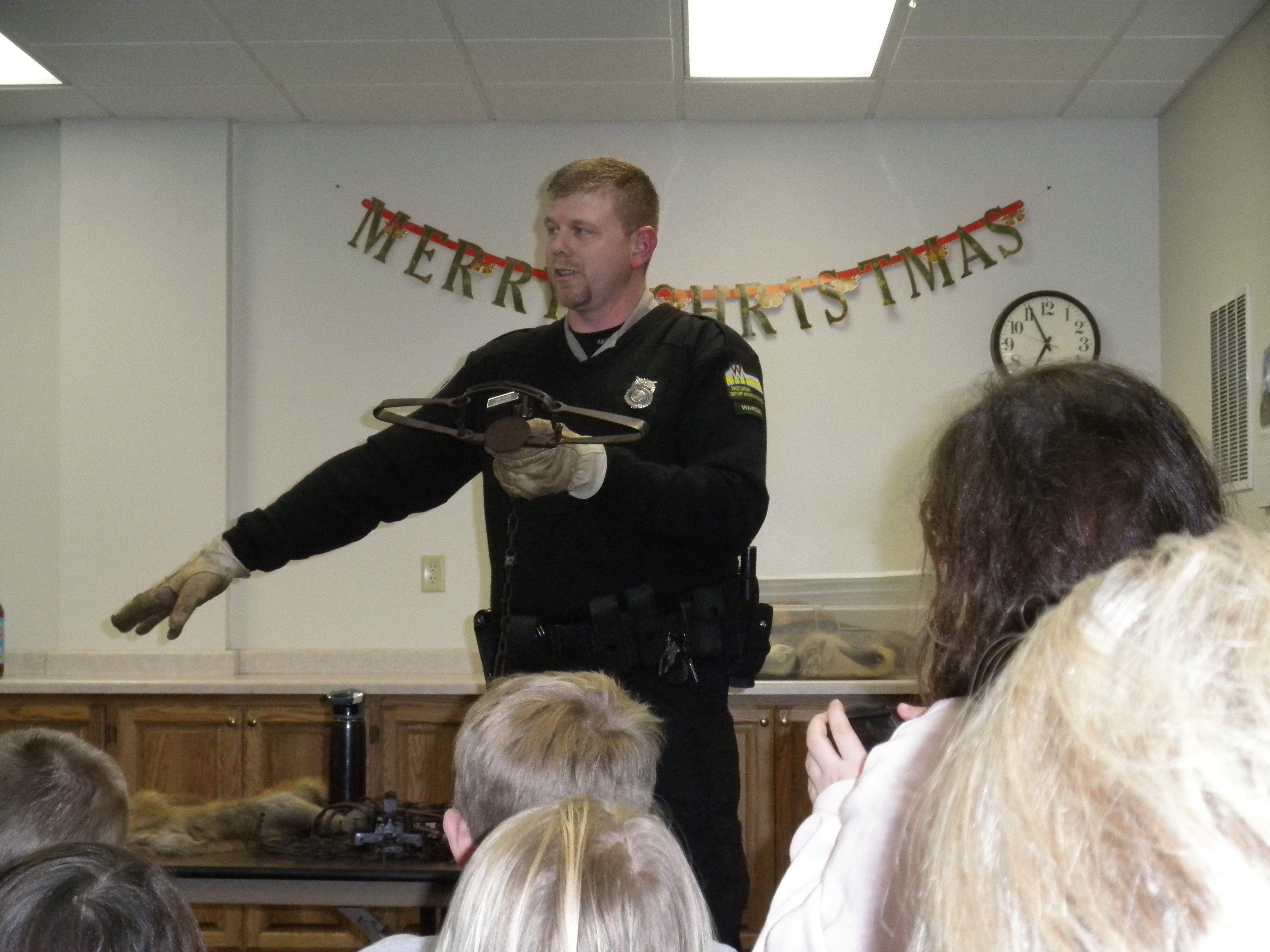
For the past 20+ my career was law enforcement. The last 13 years of my career I was a Conservation Warden for the Wisconsin Department of Natural Resources. That is me in the photo below giving a trapping and wildlife management presentation at the Farmington All-Stars 4-H club. I enjoyed teaching these programs so much I decided that teaching would be my next career path.
OLYMPUS DIGITAL CAMERA
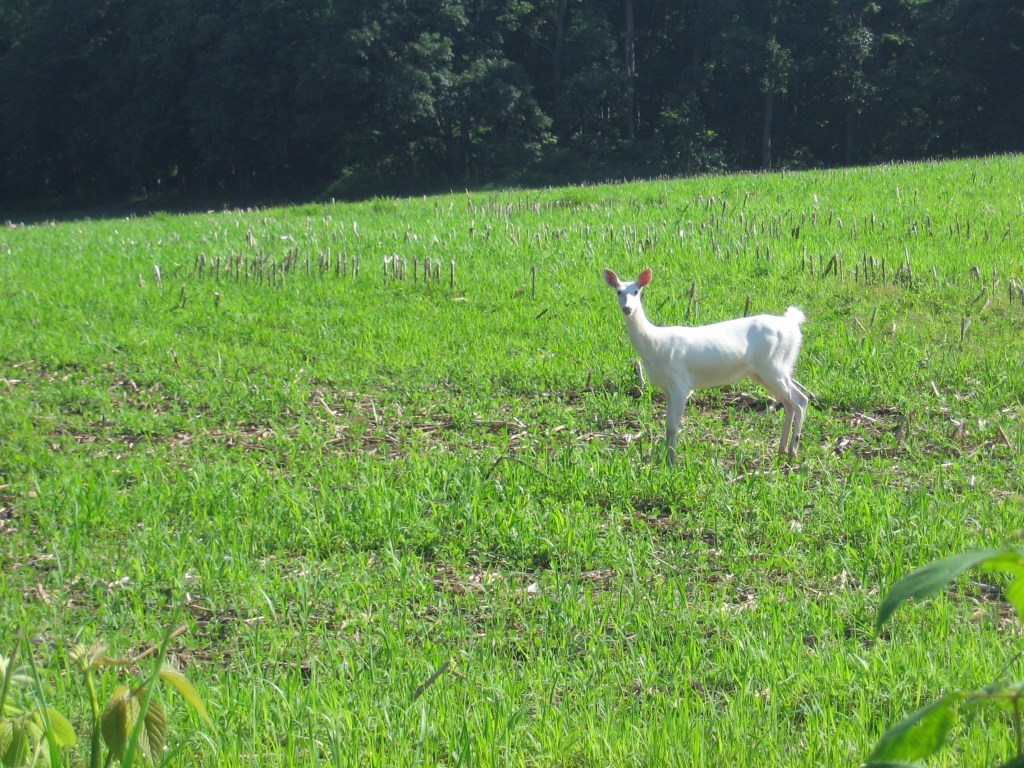
This is a photo I took of a white deer in Jefferson County. She is the perfect example of science being all around us. A small change in her genetic coding that controls pigmentation and “POOF”.
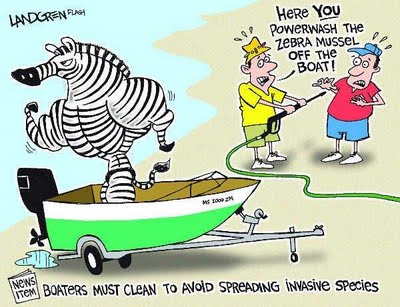
If Zebra Mussels were this easy to find we might have an easier time eliminating them!
Welcome to my disciplinary text set focused on invasive species.
These text sets are structured for students in 9th and 10th grade Biology and Environmental Science. This class may be culturally diverse with some ELL’s so I would offer additional resources to be sure all students are engaged in the content. The videos within the text sets have closed captioning and some language translation available. The text does offer some translations to readings if that will assist students with comprehension. I will be sure the ESL teacher is available and on my class schedule for those ELL students that may struggling with the reading. The text sets that are multimedia offer written, visual, and audio instructions so content is presented in a multitude of ways for different types of learners.
The text sets will be part of units on the ecosystem, biodiversity, and environmental stability. The assessments for the text sets can be done in writing or illustration if necessary, for ELL’s to demonstrate understanding and knowledge of the content. In addition, invasive species are not just a North American problem. The content can draw on the past cultural experiences of ELL’s. These past experiences will assist them in class discussion.
I am not sure if there is a ‘best’ order to consider for introducing the text sets. I am however, convinced that the last text to be taught is the Emerald Ash Bore(EAB). The activity for this class involves out of classroom investigation. My thoughts for this are that students can compile some questions of their own regarding the Emerald Ash Bore from previous readings and text sets. The Students will then be assigned an area designated by the teacher to investigate for signs of the EAB. Prior to beginning this unit, I would contact and then work with city or county arborists to determine areas where EAB is already present. Students will then have the opportunity to gather data; photos, written, and possibly specimens if approved. The students will then put together a presentation to be shared with the class. The text sets would be used with the approved text book to deliver a layered approach to the content.
These are my thoughts. I would appreciate any constructive comments or ideas that you may have.
The threat of invasive species – Jennifer Klos
Citation:
Kloss,
J. (n.d.). You Tube. Retrieved from The threat of invasive species-TED Ed
lessons : https://youtube.be/spTWwqVP 2s
Summary: This
video is an introduction to invasive species.
The video explores how species moved naturally and with the help of
humans.
Text
Complexity:
Quantitative: The text complexity was determined by using Story Toolz. The text was given an average of 9.7.
Qualitative: The quantitative average of 9.7 is accurate in my opinion. The video does have several vocabulary words that would be introduced to students in advance of viewing.
Purpose: I would
use this text as an introduction to invasive species. It does a good job of explaining what
invasive species are and why they can be so destructive.
Question/Activity: Why should invasive species be monitored and what can be done to prevent further invasions?
Asian Carp: Threat to Great Lakes – QUEST Wisconsin
Citation: KQDondemand. (n.d.). you Tube. Retrieved from
Asian Carp: Threat to Great Lakes-Quest Wisconsin:
https://youtube.be/j9fgqA8kpYA
Summary: This video provides history, current status, and possible solutions to the invasive Silver and Big Head Carp and the Great Lakes Basin.
Text Complexity:
Quantitative: Story Toolz give an average text complexity of 11 to the video.
Qualitative:The complexity average provided by Story Toolz I believe is too high. The content covered in the video is not complex and vocabulary used is explained. In my opinion the text is at a 9th grade readability.
Purpose: This text
will be used as a connecting piece in the invasive species unit. This video provides the history of the Silver
and Big head Carp in the United States and its current push north. The environmental threat is explained well
and is of no surprise. However, the
economic threat the species poses is very real and would be felt by countless
numbers of people.
Question/Activity: How is the University of Notre Dam using the EDMA genetic information to combat the further spread of these invasive Carp? What other ways could be used to control the spread using modern science (think science fiction like)?
Summary: This text contains basic information
regarding invasive species. The text
concentrates on one invasive species and goes through the life cycle, explains
the research study conducted and provides data that is catered to the students.
Text
Complexity:
Quantitative: The text is given a complexity average of 9.8 by Story Toolz.
Qualitative: After a review of the text I think the readability assigned by Story Toolz is correct. The students will have already been introduced to the concept of Invasive Species and will have completed basic readings explaining the negative impacts these plants and animals have on native ecosystems.
Purpose: This text will be introduced after students have already explored the basic concepts of invasive species. The text would be used to illustrate how research is conducted and what can be done to control the spread of invasive species.
Question/Activity: Students would need to research an invasisve species within the state. Students would be required to research the history of the organism, what research has been done, and what is being done to eliminate the problem.
*********Emerald Ash Bore********
Emerald Ash Bore, Emerald Ash Borer Information Network
Citations: University., M. S. (2019, june 3). emerald ash bore information network. Retrieved from emerald ash bore information network: Foundation, T. A. (2015, april 2). http://www.emeraldashborer.info/indicia.php
Summary: These
texts work together to provide information about the Emerald Ash Bore (EAB). The text includes how the EAB may have
arrived in the United States, how it has spread to different states, and what
is being done to combat this invasive species.
Text
Complexity:
Quantitative: The first article from the Arbor Day Foundation has an average text complexity of 12.4. The second article from the University of Michigan was given an average text complexity of 9.5. The text complexity was determined by using Story Toolz.
Qualitative:After reading each text I consider both to be at an average reading complexity of 10th grade.
Purpose: These
two texts would be used after I had begun the invasive species unit. The texts would be used as a multiclass
lesson regarding the EAB and its effects on the ecosystem, economy, and
environment.
Question/Activity: Field and Classroom. Students would be broken into groups of 4 and assigned different areas where EAB has infested local trees. The teacher would have assigned areas based on information from city or county arborist. Students would gather data based on questions they have formed from the assigned readings. Students would return to the classroom and create a presentation to present to the rest of the class.
Summary: This text is for English Language Learner’s
to explore invasive species. The content
and knowledge are included but are done so with lower level vocabulary. The text
also included links to related topics.
Text
Complexity:
Quantitative: I used Story Toolz to calculate the text complexity. The text was given a readability of 8.9.
Qualitative:After reading through the text I agree with Story Toolz that the text has a readability of 8.9.
Purpose: The purpose of the text is to introduce ELL
or ESL students to invasive species. The
text includes links to related invasive species topics, such as ways to combat
and promote native species.
Question/Activity: Prior to the reading I would ask the students to explain or draw what they think an invasive species is. After the reading I would ask the same question to assess their knowledge of the reading content.
Summary: The text explores how invasive species affect our every day lives. The reading starts at breakfast and continues all the way to an afternoon baseball game.
Text Complexity:
Quantitative: The text complexity was given a 7.9 by Story
Toolz.
Qualitative: I think the readability rating provided by Story Toolz is accurate. The reading covers the topic of invasive species without being too difficult. When just looking at the vocabulary the rating seems too low. However, the use of rewordify could simplify this even further.
The thought of creating a lesson
that included photos, video and text was very exciting. During my life I have found that I learn best
when content is presented in multiple forms.
As a result, this assignment sounded like it would be a great deal of
fun. I was only partially correct in my
thinking. I have discovered that I am
not as tech savvy as I would like. I
needed to learn how to use the programs to create the project before I could
even begin the project itself. After
some struggles, I was able to get pictures, text and videos into the
lesson.
The topic I chose
was invasive species. At first, I thought
I would just include those invasive species in Wisconsin. However, I did not think this would be enough
information and many of those same invasive species we have in Wisconsin are
found in many other states as well. It would
not be possible to list an invasive for each state. I just would not have the time nor the space
to do this. I decided that I would limit
the number of species but many of them would also be found in Wisconsin as well
as other states. This worked out very
well.
I was not able
to find usable video for each species. I
was able to find the information and very good photographs to have a visual and
text explanation. I was surprised that I
was not able to locate video from wildlife officials, biologists, or entomologists
with information regarding the control of all the species I chose. I am sure there is such video out there I
just was not able to locate it in time. I
did locate very good video that was over five minutes in length. I chose not to include these videos because I
thought they took too much time.
However, looking back I could have easily used any video regardless of
length. I don’t have to show the entire
video to the class, just what I feel is relevant and most useful for students.
As I stated I am
a visual learner. The multimedia format
works well for me. I was able to view the
invasive species, read the text about it and listen to the narrator on the
video. Having three different ways to receive
the content was more engaging than just reading. I often do not get much from reading unless I
am really interested in the topic. For
that reason, I know if there are additional methods to explain the content, it
works best for me. I am sure this is
true with many students. Just because I find
invasive species interesting and a threat to our natural resources and economy
does not mean all my students will. For
that reason, I think the visual/multimedia approach is a great resource for
engaging more of the students.
Where I am and where I want to go……well that is a great question. Currently I am in graduate school at UW Milwaukee. To be honest I can’t think of a better place to be studying Curriculum and Instruction. However, I think the question, where I am and where I want to go, is meant for deeper thought, for a deeper understanding of myself. When I think of it in this context it becomes a much more complex and serious question. Where I am; I am right where I am supposed to be at this moment. I am where my children and my wife need me. Although, I am also in school studying to become a science teacher. I am starting a second career, which I must admit is no easy task. I guess I could say that I am beginning a new chapter in my life, a little nervous, a lot excited, and with the support of my family. The next part, where I want to go, that seems like a simple enough question to answer. Or is it? I really want to go where I can make a difference. The problem is I have no idea where that may be. The classes I have taken so far have really made me think about how I was taught and what I learned as a result. I am going all the way back to the beginning, and all the way through my undergraduate studies. What do I think of how I was taught. I think I was CHEATED! If you are one of my past teachers please understand I don’t mean that personally. What I am saying is this. There was research done as far back as the 1930’s regarding how children learn, and the science was there to support it. Unfortunately, no one really took notice and teaching continued as it had. During the civil rights movement and at the time of Brown vs. The Board of Education, it was discovered that students of different racial and cultural backgrounds gained more knowledge and understanding of the content being taught than those in segregated schools. Unfortunately, no one really took notice and teaching continued as it had. There are so many other examples of how I think I was, and countless numbers of other students were, cheated in our education. I asked myself, why didn’t education change towards better methods supported by scientific research. I think the answer is, no one likes to change, it is scary, it is different, and what if I don’t like it. I agree, I don’t like change very much either. Now, I think about the new adventure I have undertaken. This new career path to become a teacher is a big change. Becoming a graduate student is a really big change. I can say without a doubt that it is different and scary. However, I can also say that it is a wonderful change. I want to make a difference as an educator and perhaps I will get my opportunity next year. I know that I cannot change schools everywhere, but I can start a change in my own classroom. I am right where I am supposed to be. I want to go where I am wanted and where I can make a difference.
This is an example post, originally published as part of Blogging University. Enroll in one of our ten programs, and start your blog right.
You’re going to publish a post today. Don’t worry about how your blog looks. Don’t worry if you haven’t given it a name yet, or you’re feeling overwhelmed. Just click the “New Post” button, and tell us why you’re here.
Why do this?
Because it gives new readers context. What are you about? Why should they read your blog?
Because it will help you focus you own ideas about your blog and what you’d like to do with it.
The post can be short or long, a personal intro to your life or a bloggy mission statement, a manifesto for the future or a simple outline of your the types of things you hope to publish.
To help you get started, here are a few questions:
Why are you blogging publicly, rather than keeping a personal journal?
What topics do you think you’ll write about?
Who would you love to connect with via your blog?
If you blog successfully throughout the next year, what would you hope to have accomplished?
You’re not locked into any of this; one of the wonderful things about blogs is how they constantly evolve as we learn, grow, and interact with one another — but it’s good to know where and why you started, and articulating your goals may just give you a few other post ideas.
Can’t think how to get started? Just write the first thing that pops into your head. Anne Lamott, author of a book on writing we love, says that you need to give yourself permission to write a “crappy first draft”. Anne makes a great point — just start writing, and worry about editing it later.
When you’re ready to publish, give your post three to five tags that describe your blog’s focus — writing, photography, fiction, parenting, food, cars, movies, sports, whatever. These tags will help others who care about your topics find you in the Reader. Make sure one of the tags is “zerotohero,” so other new bloggers can find you, too.
 Ryan's Blog